Shopify Store Automation for Solo Founders
A practical guide for solo DTC founders on automating Shopify morning routines, order monitoring, and ad checks without stacking 10 monthly apps.
Most advice about Shopify store automation starts by recommending another monthly subscription. You are told to install one app for email, another for inventory alerts, a third for review requests, a fourth for order tracking, and a fifth for ad reporting.
Before you know it, your store is running on a dozen disconnected tools costing hundreds of dollars every month. Even worse, you are still the person sitting at your desk every morning connecting the dots, moving data manually, and checking whether everything actually worked.
For a solo DTC founder, app bloat does not solve the operational grind. It creates a secondary management job.
Here is how solo operators build clean, effective Shopify store automation that handles the daily morning loop without piling on software subscriptions or technical debt.
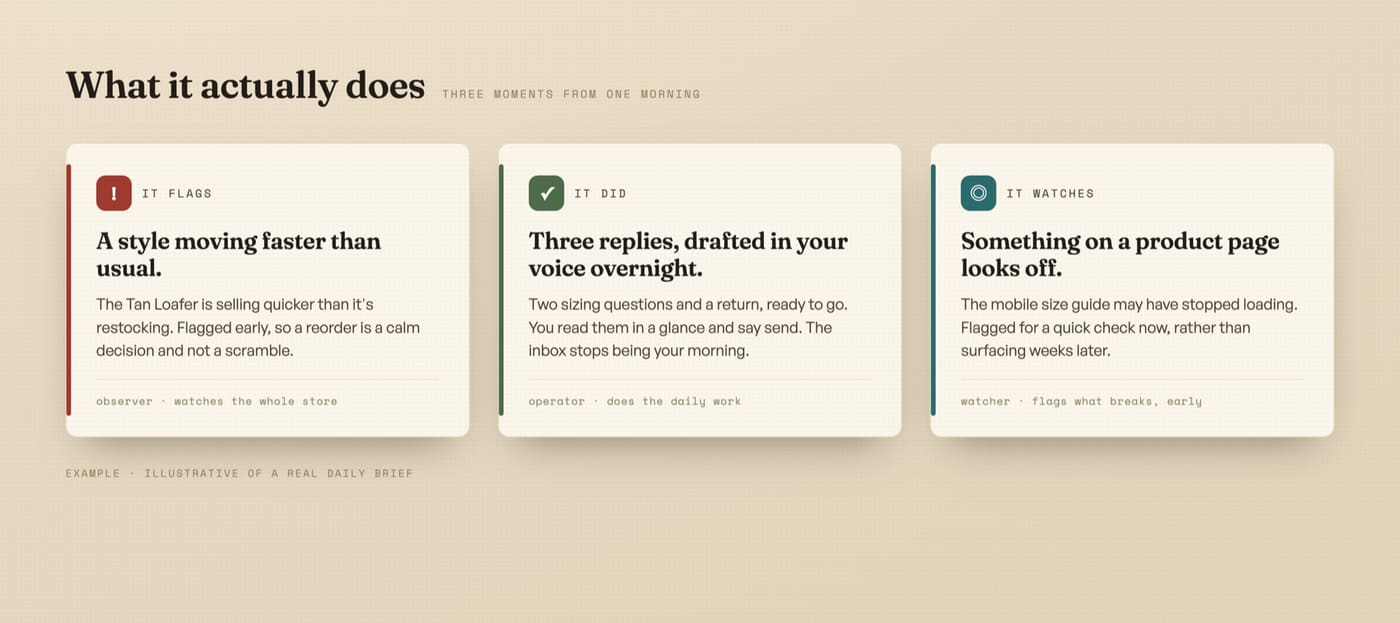 DNA’s custom AI cofounder system connects live to your store data, running single-threaded operational loops every morning.
Why traditional Shopify app stacks fail solo operators
When you operate a Shopify store by yourself, every daily task competes for your attention. The trap most solo founders fall into is treating every problem with a single point solution.
If order syncs stall, you add an integration tool. If cart abandonments rise, you install a popup plugin. If customer support questions pile up, you sign up for a helpdesk platform.
This approach fails solo operators for three specific reasons:
- Disconnected Context: Each app sees only one narrow slice of your business. Your ad reporting tool does not know your inventory levels, and your email app does not know your current fulfillment delays.
- Subscription Fatigue: Paying $29 to $99 a month per app quickly drains margins, especially for growing stores where recurring software overhead compounds fast.
- Manual Supervision: Disconnected apps do not run themselves. You still have to log into five separate dashboards every morning to verify that orders synced, ads performed, and messages got answered.
Real automation for a solo founder does not mean adding more apps. It means connecting your existing store data to a unified operating system that handles your morning routine.
What store operations can actually be automated today
Not every job in an e-commerce business should be automated. Creative direction, product development, positioning, and strategic decisions require human judgment.
However, routine operational checks follow predictable patterns that can be automated completely:
- Overnight Order Sweeps: Flagging unfulfilled orders, payment holds, address errors, or inventory sync exceptions before customers email you.
- Daily Performance Pulse: Reviewing traffic, conversion rates, and ad spend across channels without opening three separate analytics dashboards.
- Customer Support Drafts: Generating personalized, context-aware email responses for tracking requests, returns, and order modifications.
- Storefront Quality Assurance: Testing cart drawers, checkout flows, and discount codes automatically to catch broken links before buyers do.
- Inventory and Merchandising Watch: Monitoring fast-selling SKUs and flagging low stock items before they sell out.
When these repetitive checks happen automatically every morning, your role shifts from doing the manual labor to simply reviewing and approving the summary.
The three models of Shopify store automation
Solo founders generally choose between three distinct automation frameworks:
| Automation Model | How it works | Setup Effort | Monthly Cost | The Honest Catch |
|---|---|---|---|---|
| Point Solution Apps | Separate Shopify App Store plugins for each task | Low (plug and play) | High ($200 to $500+ per month total) | Fragmented data, high recurring costs, and you still manage every dashboard |
| Webhook Workflows (Zapier/Make) | Custom trigger-action zaps connecting APIs | Medium to High | Medium ($30 to $100 per month) | Brittle connections that break when APIs change, requiring ongoing troubleshooting |
| Connected AI Cofounder System | One read-only AI operating system running daily loops | Medium (one-time setup) | Low (token usage only, your own API key) | Requires defining clear brand rules and operating routines upfront |
💡 Official Partner Access: If you are setting up a new store or launching a secondary brand, you can claim Shopify’s official 3-day free trial plus $1/month for your first 3 months through DNA’s partner link.
How to build your automated morning loop (Step by Step)
Building an automated operational system for your Shopify store does not require coding skills or hiring an expensive agency. You can set up a structured morning loop in four clear steps:
1. Document your daily operating checklist
Before automating any workflow, write down the exact steps you take every morning. Order matters. Separate essential health checks from tasks that can wait until afternoon.
To save time, download the daily operating loop cheat sheet, which details the exact morning checklist a real operating brand uses to complete daily sweeps in 15 minutes.
2. Connect read-only store diagnostics
Avoid giving automated tools broad write permissions over your live storefront until you have tested their diagnostic accuracy. Start with read-only data connections that observe store performance and report findings safely.
For example, when you run the storekeeper free audit pack, Claude inspects your store structure, conversion pathways, and merchandising signals, handing back an actionable report card without altering your live theme code.
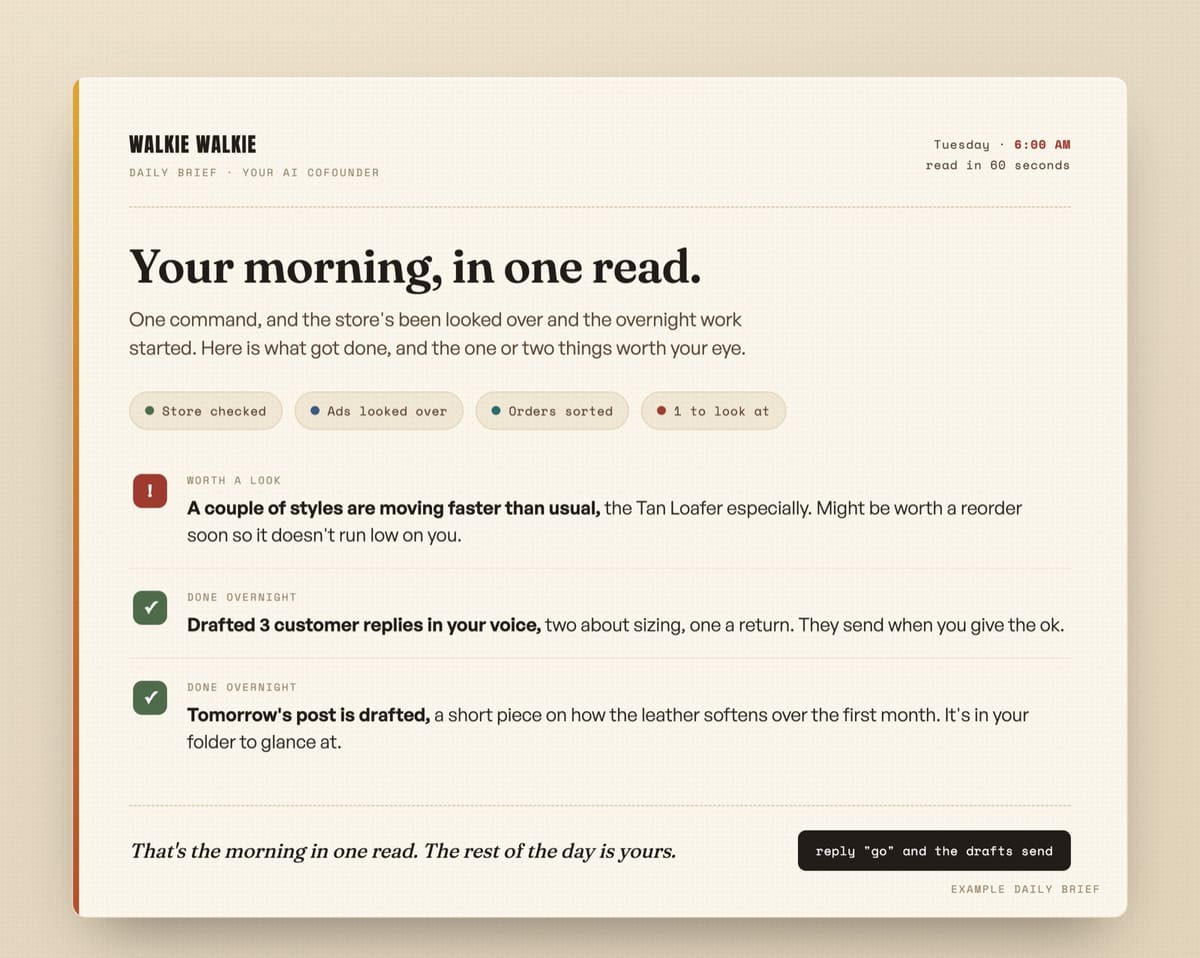 DNA’s storekeeper audit system hands back a scored morning report card highlighting conversion leaks and operational priorities.
3. Automate storefront QA and checkout checks
Broken checkout buttons, missing shipping rates, and failed discount codes cost solo founders thousands in lost revenue every month. Manual testing is tedious, so most operators skip it until a customer complains.
Using open-source browser automation tools like the storefront QA kit, you can let Claude run an automated end-to-end checkout test every morning, ensuring your cart drawer and payment gateway function perfectly.
4. Enforce single-threaded operating rules
An automated system must operate under strict, predictable boundaries. Give your AI system a written operating manual (CLAUDE.md) that defines your brand voice, customer service policies, and single-threaded task execution rules.
You can inspect the Claude Code starter kit to access the exact folder structure, system prompts, and handoff protocols we use for every store setup.
How much time does store automation actually save?
The honest win is hours, not magic.
Automating your Shopify store operations will not magically double your revenue overnight. Anyone making promises about guaranteed sales increases is selling marketing hype.
What store automation does deliver is 2 to 3 hours given back every single day. Instead of spending your morning triaging emails, checking ad dashboards, and tracking unfulfilled orders, you receive a clean operational summary at 7am.
That time goes directly into product development, founder-led content, strategic outreach, or simply stepping away from your computer on time.
Build your store automation engine with DNA
If setting up read-only API connections, browser automation scripts, and custom operating rules sounds complex, you do not have to build it alone.
At Daily Needs Association (DNA), we design and build done-for-you AI operating systems tailored specifically for solo Shopify founders and DTC operators. We configure your store integrations, write your brand operating rules, and deploy a custom AI cofounder system that runs your morning operating loop reliably every day.
You retain 100 percent ownership of your system, pay no recurring software markups, and operate your store with complete peace of mind.
Next steps for your Shopify store
If you want a clear assessment of what store automation would look like for your specific brand, start with a concrete read:
- Explore our free resources shelf for open-source kits, checklists, and setup guides.
- Request a free store review. Share your store URL, and we will send back a plain-spoken teardown showing exactly which morning tasks an AI cofounder would watch, run, and handle for you.
- See how the whole system works and review the operational proof behind our operating framework.
- See how this fits into the bigger picture in running a Shopify store by yourself: the full operating guide.

Tired of generic SEO fluff when searching for store fixes?
Google Search is packed with affiliate articles by people who never ran a store. Tell Google to prioritize real e-commerce field notes, working code, and honest math whenever you search.